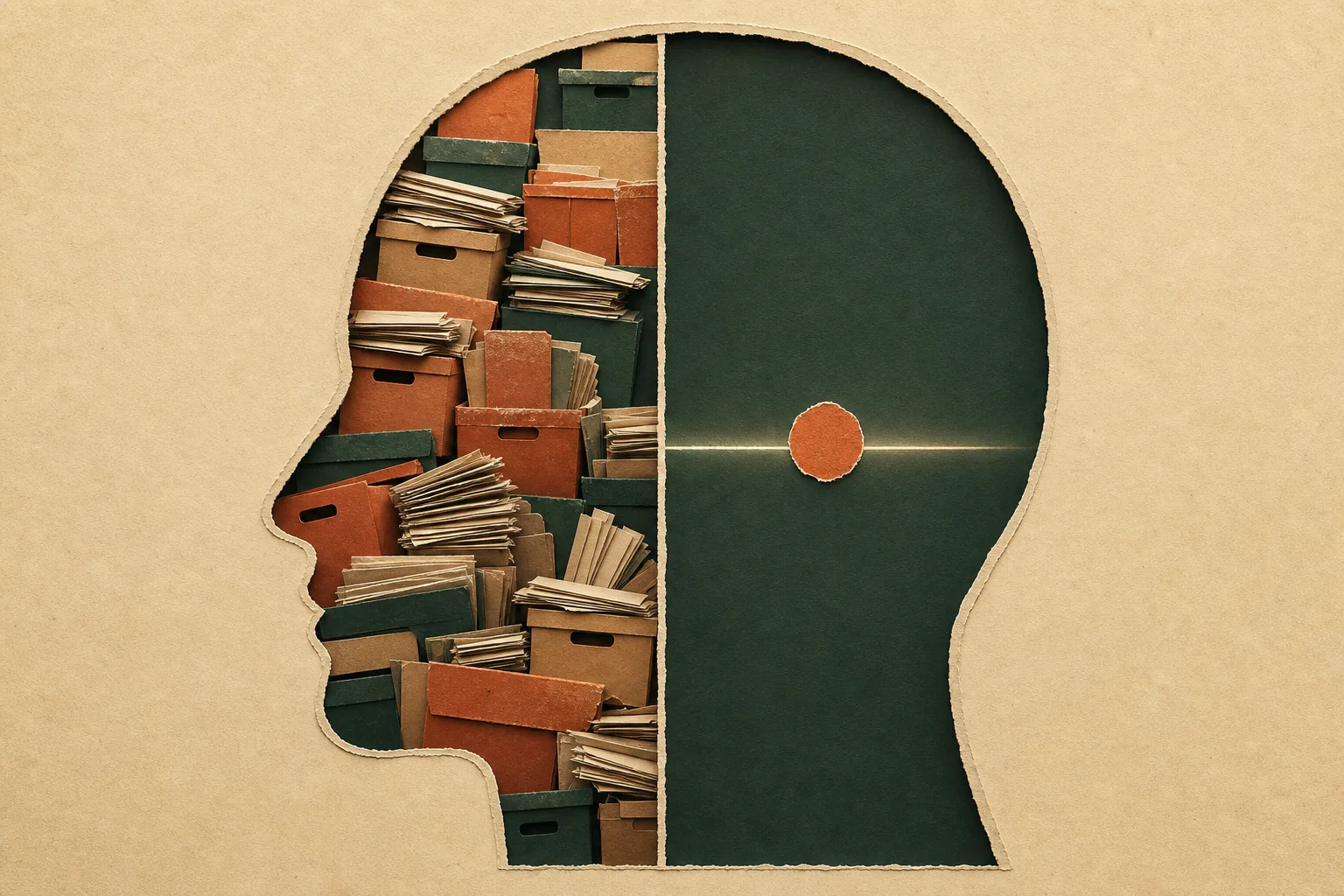
I stopped holding things in my head. What came out of that space, and what it might be costing me.
I came across Pocket this week. It is a small recorder that clips to the back of your phone, listens to your meetings and your hallway conversations, and pushes everything to the cloud as transcripts, summaries, action items and mind maps. Four days of battery. More than 120 languages. Around a hundred dollars.
The promise underneath the product is that you never have to hold a conversation in your head again.
I am writing this post with Wispr Flow. I speak, it writes. I have used it for months for almost everything: commit messages, Slack replies, prompts for Claude CodeClaude Code Anthropic's command-line tool. You build software by talking to an AI right in the terminal — it reads your code, edits files, and runs tests., the paragraph you are reading. On August 5 Flow shipped a notetaker for Mac that transcribes meetings from system audio without joining the call. So the tool I use to talk instead of typing now also remembers meetings for me.
Two products, one bet: your voice is the input and the machine holds the rest.
I like both of them. That is what makes this uncomfortable to write.
The part where it works
My output over the last two years does not look like the fifteen before it. I ship more. I ship things nobody asked me for.
Volume is the least interesting part of what changed, though. What changed is what my head is free to hold.
I could always take notes. That part is worth saying plainly, because the easy version of this story is that AI handed us a memory we never had, and it is not true. I have taken notes my whole career.
What was never easy was the cost on both ends. Writing something down properly took attention I was already spending on the problem. Finding it again three months later was its own small project, and it failed often enough that I stopped trusting it. So the notes existed and I still carried most things in my head, because my head had better search than my notes did.
That is the thing that actually changed. Not the writing down. The getting back. I speak and it is written. I ask and it comes back, in context, in seconds.
The moment retrieval became reliable, holding stopped being worth what it cost.
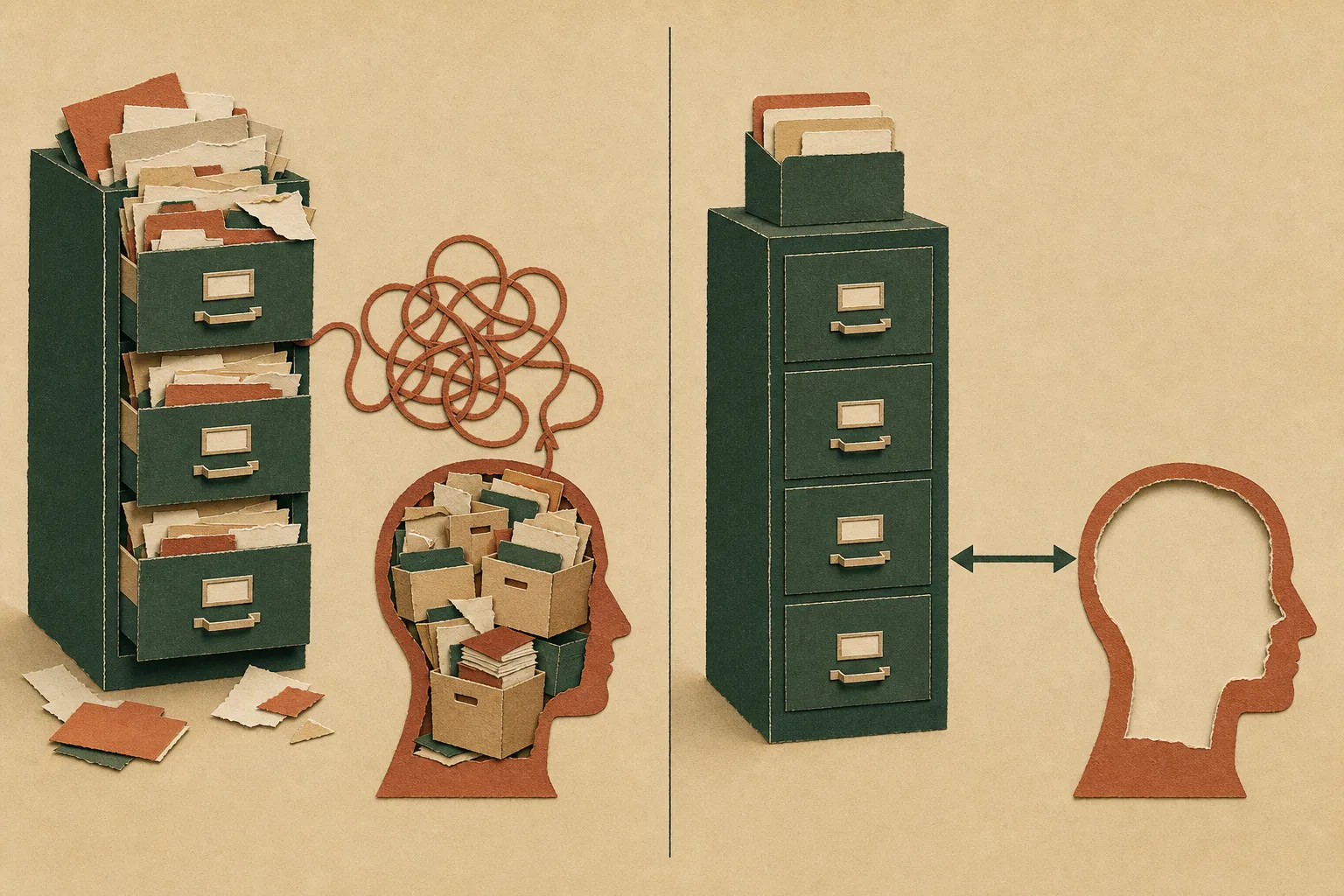
And it cost a lot. A large share of my capacity used to go to custody: the shape of the codebase, why we did the strange thing in that migration, what was actually agreed in the meeting, which of Tuesday's four decisions were still alive. None of that was thinking. It was holding. Working memoryworking memory The small amount of information your mind can actively hold at once — like a desk, not a filing cabinet. Fill it up and there's no space left to think. is small and it is the most contested resource I have, and everything sitting in it is capacity unavailable for the thing I am trying to make.
Now most of that sits somewhere else. Transcripts, agents, context filescontext files Plain-text notes you keep next to a project so an AI reads them before it starts working. A memory that lives in the repository instead of in your head., a recorder in somebody's pocket. What came back was not free time. It was room.
That room is where the creative part lives, and I notice it as a change in the question I ask myself. It used to be "can I get this done." Now it is "what would this look like if it were good," and right after that, "what else is possible here." The second question is the one that produces things nobody asked for. I am not solving more problems per week. I am spending more of the week inside the part of the work where the problem is still open, which is the only part I ever really wanted.
The other change is the gap between having an idea and being able to look at it. When that gap was three weekends, most ideas died in it. Now it is twenty minutes, and a much worse idea is still worth building, because building it is how I find out whether it was bad. Things that would never have survived a cost-benefit conversation with myself now simply get made. Most of them turn out to be bad ideas. Some of them turn out to be good ones. The point is that I only know which is which because I built them, and before, I never got that far.
There is a chemical story here that I think is honest. Novelty and the anticipation of a reward recruit the dopaminergic systemdopaminergic system The brain circuit that runs on dopamine. It's less about pleasure than about wanting — it's what pushes you toward the next thing., and dopamine looks more like a signal for exploration than a signal for pleasure. The Frontiers work calling it "the neuromodulator of exploration" argues exactly that: it pushes you toward the unknown rather than toward the comfortable.
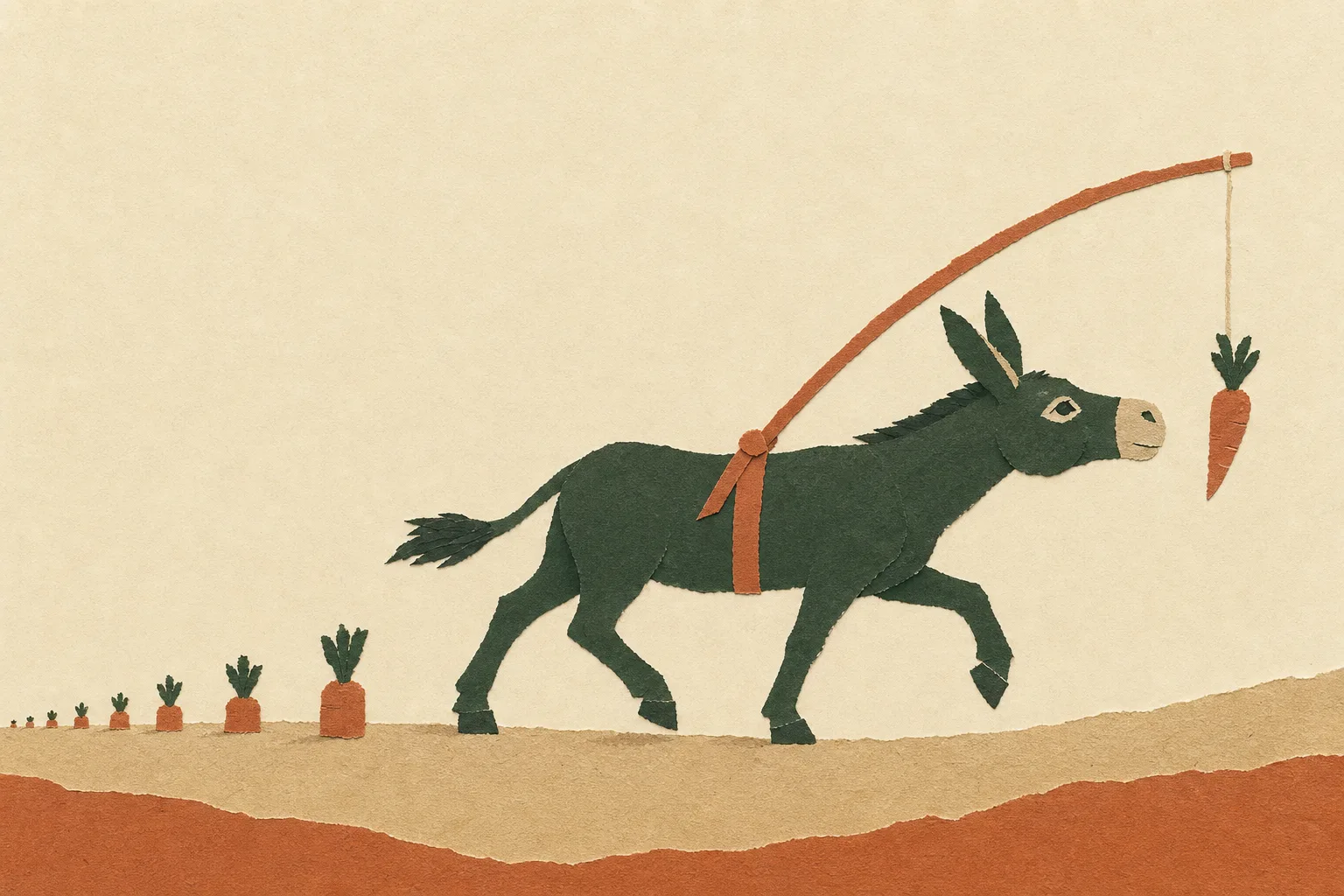
I feel that loop very clearly. Create, see it run, want the next one. It is the carrot on the stick. I move because the carrot keeps moving, and I have never made this much in my life.
The part where I got suspicious
I built so much this year that I have to go back and read my own decisions like they belong to someone else. Not the code. The decisions. Why this shape and not the other one.
Sometimes I do not know where a thing lives, or how it ended up being done that way. Part of that was on purpose. When the problem was small, or when the thing was a prototype built to answer one question, I let the model make the calls and I did not watch closely. That is a fair trade and I would make it again.
Then some of those prototypes stayed alive. Weeks later I would come back and rewrite them with architecture I had actually chosen, because the first version had architecture nobody chose.
None of that bothers me, and I want to be clear about why. My work and the model's work are mixed together now. Something I decided and something I approved look identical in a repository, and I am accountable for both. Living with that is the job at this particular moment, and I would rather be good at it than nostalgic about the alternative.
What has to stay deliberate is the delegation itself. Not the decision, the act of handing the decision over. A prototype built to test an idea, low risk, nothing downstream: let the model choose, I do not need to be in that loop. Anything reaching production without guardrails: no, regardless of who or what wrote it.
Delegated is fine. Unattended is not.
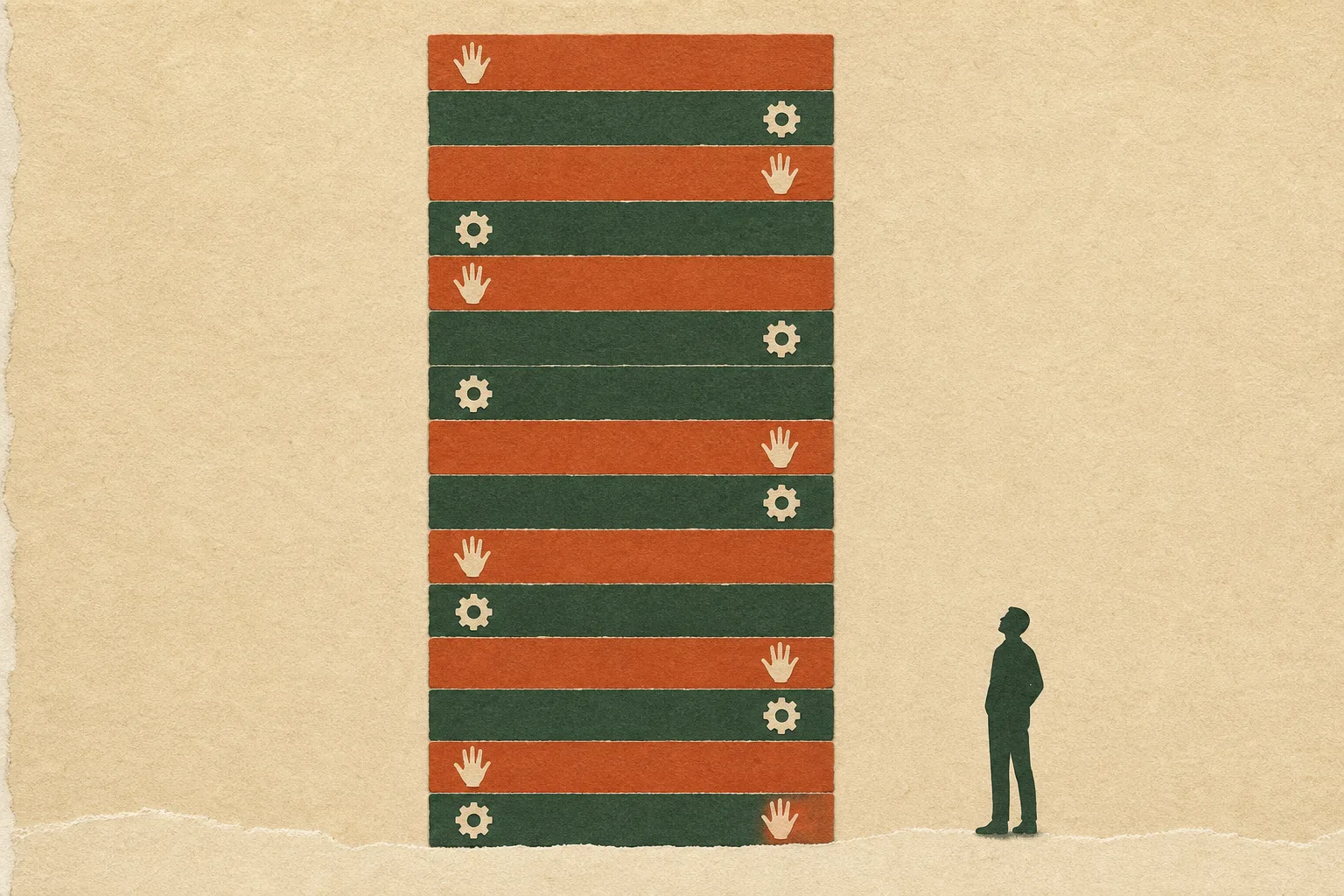
The part I could not settle is the other one. Whether re-reading my own decisions is simply the shape of working this way, or whether something in me is getting weaker. So I went looking.
What I found when I went looking
I expected the research to take a side. It does not.
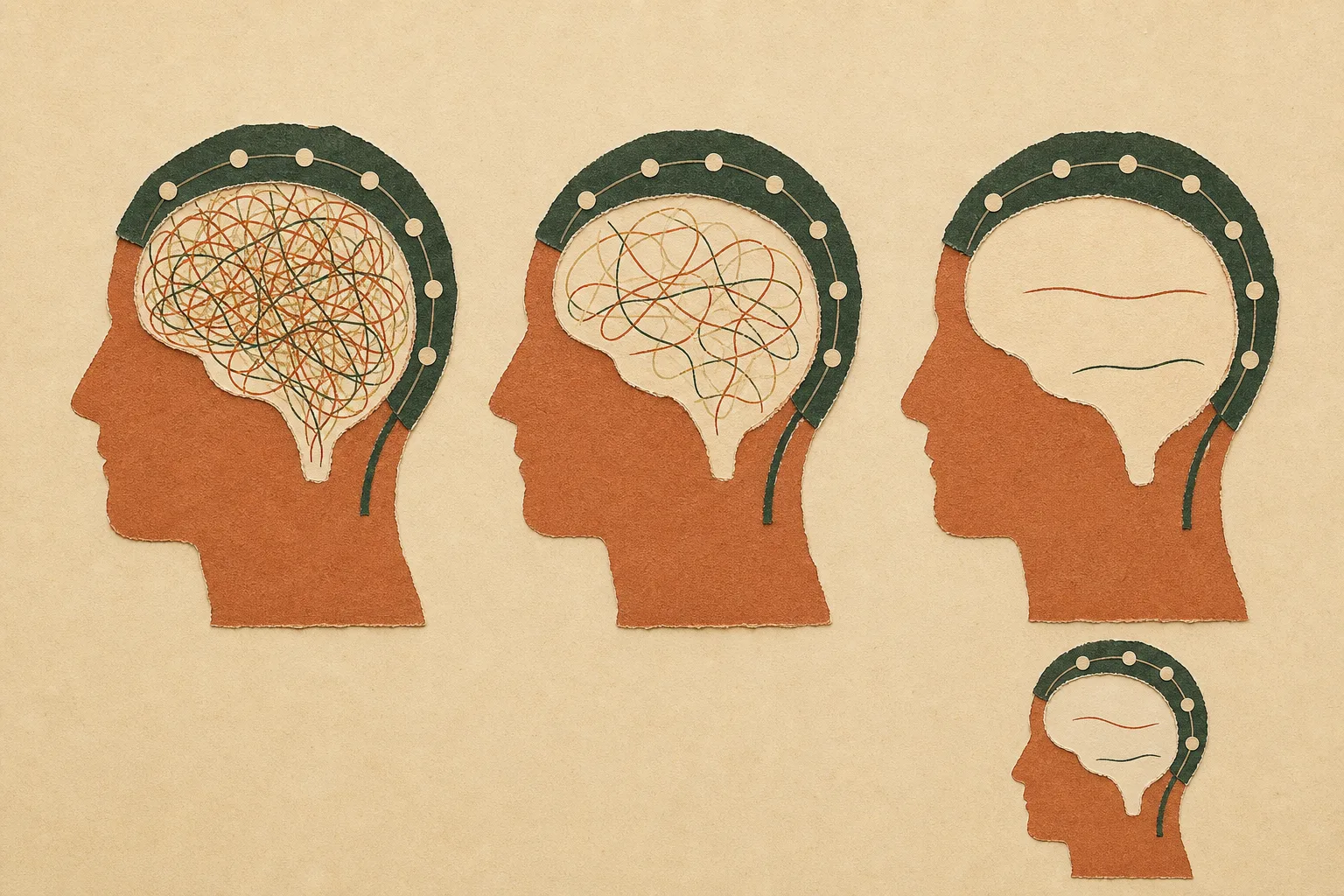
At MIT's Media Lab they put EEGEEG A cap of sensors that reads the brain's electrical activity through the scalp. It shows how hard a brain is working, not what it's thinking about. caps on people writing essays and split them into three groups: one working with an LLMLLM Large Language Model — an AI trained on enormous amounts of text to write and answer like a person. ChatGPT and Claude are the ones you've heard of., one with a search engine, one with nothing. The people writing with nothing had the busiest brains. The people writing with the LLM had the quietest. Then the researchers took the tools away and asked that group to write alone, and the quiet stayed. Some of them could not quote sentences they had written minutes earlier. The word the authors chose was debt.
That is the version of the story that travels well, and it matches something I can feel. It is also four months long, and eighteen people finished the last session. A warning, not a verdict.
The finding that actually got me was smaller. Microsoft and Carnegie Mellon asked a few hundred knowledge workers about real AI use at work and found two opposite effects sitting next to each other. The more you trust the model, the less critically you think. The more you trust yourself, the more critically you think. The effort does not disappear, it relocates, from producing to checking. And the people most likely to skip the checking are the ones who could not have caught the error anyway.
That is not a story about AI making us stupid.
It is a story about where confidence goes when you hand work to something that is usually right.
Then there is the experiment that made me stop arguing with myself. Storm and Stone had people study a file, save it, then study a second one. Saving the first made them better at remembering the second. When the saving was unreliable, the benefit vanished. The brain only lets go of something when it trusts the shelf, and what it gets back is room.
That describes my last two years better than the MIT study does.
Where that leaves me
I think both things are true and they are not in balance.
My creative output is up, and I believe the mechanism behind it is real. There is a particular stress that comes from being the only copy of a piece of information, and I carry much less of it now. That stress was never neutral. It made me conservative. A mind that is guarding something does not wander, and wandering was always where the ideas came from.
My retention is down, and I believe that is real too. The MIT result matches something I can feel. If I did not write it, I do not know it the way I would have known it.
What I cannot tell you is the exchange rate. Nobody can yet. The MIT study is four months long. I have been working this way for about two years. The oldest honest data we have on this is younger than most of the systems I maintain.
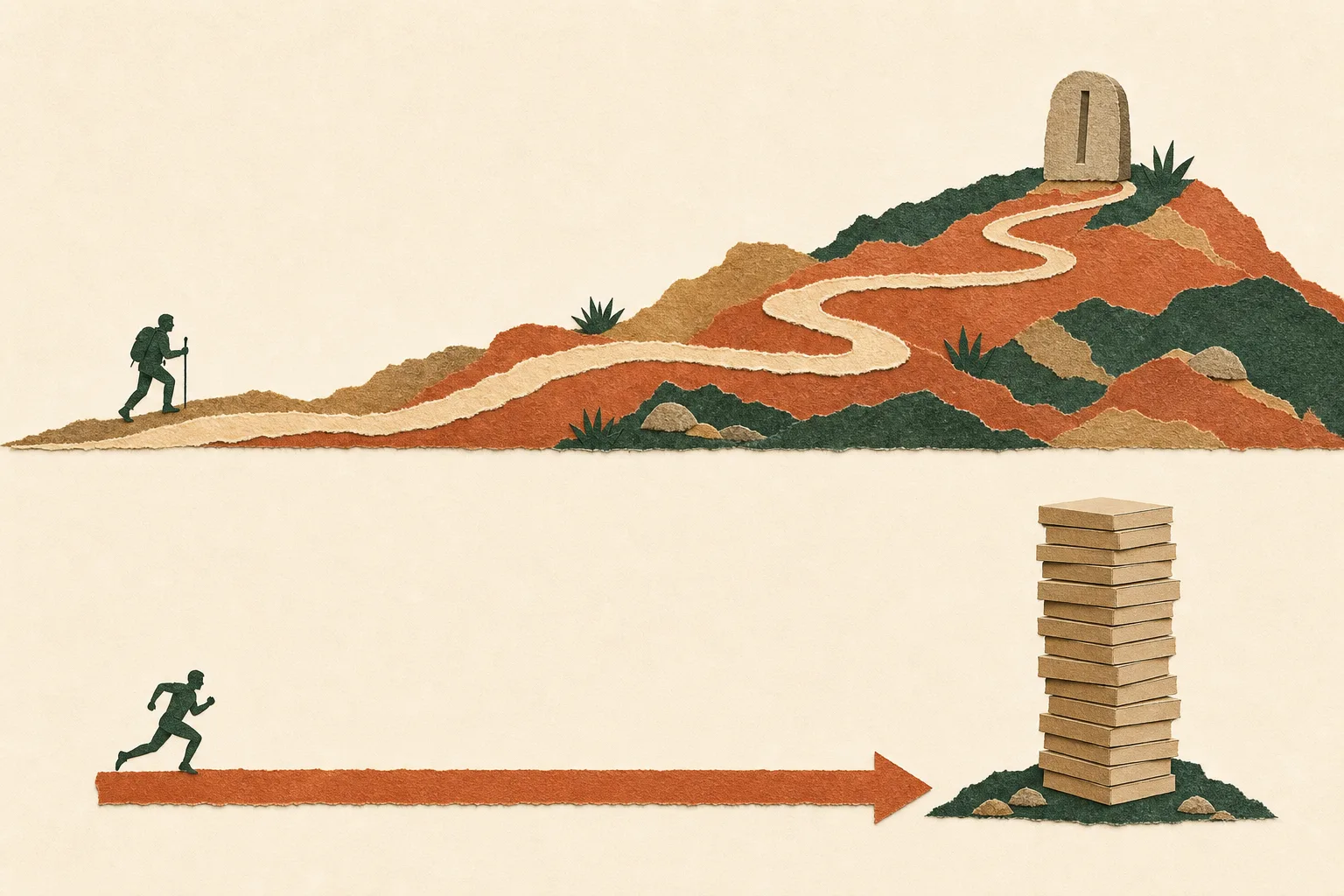
And there is a third thing that worries me more than either, which nobody is measuring. It is not that I remember less. It is that I stay with things for less time. The loop that makes this work enjoyable is the same loop that moves me to the next thing before the last one has taught me anything. Depth used to be enforced by friction. Three weekends on one problem left marks. Twenty minutes leaves a repository.
Memory might not be what we are losing. Duration might be.
What I am actually doing about it
Nothing that involves using less of this.
Mostly I am trying to change the posture. Questioning more. Treating a good answer as the opening of a conversation rather than the end of one. The Microsoft finding is a useful alarm: the dangerous moment is not when I feel unsure, it is when I feel certain and have checked nothing.
And I read more, on paper. Not as a detox, and not because paper is virtuous. A book moves at a speed I cannot accelerate, and I have started to think I need at least one thing in my week that refuses to go faster. It is the only part of my day where neither I nor a model is the bottleneck, because there is no bottleneck, there is just the next page.
Sharpen the critical side. Keep feeding the mind somewhere that is not a screen. That is the whole plan.
I have no idea if it is enough. Ask me in five years, assuming I can remember the question.

Got an idea you want to turn into a product?
Let's talk about how AI can speed up your results.
Let's talk